

El Niño and Mosquitoes: Why 2026 Could Be a Bigger Bite Season (And How to Prepare)
You empty the birdbath after a night of heavy rain, turn over the children’s toys, and clear the leaves from the gutter. By the next warm evening, though, mosquitoes are still hovering around the patio.
That is the frustrating part of a wetter weather pattern: the rain may last only a few hours, but the breeding opportunities it leaves behind can last much longer.
With a potentially strong El Niño developing in 2026, many people are asking the same question: Could this mean a bigger mosquito season?
The honest answer is that it depends on where you live, how much rain your area receives, and what happens locally after storms. El Niño does not create identical conditions everywhere. However, in parts of the southern United States and other regions where warmth and moisture line up, it could make mosquito activity more noticeable and extend the season into 2027.
What is El Niño, and why does it matter to mosquitoes?
El Niño is a recurring warming of ocean water in the central and eastern tropical Pacific. That change can influence weather patterns far beyond the Pacific, shifting rainfall, temperature, storms, and drought conditions around the world.
According to NOAA’s El Niño monitoring information, the 2026–27 event is expected to become strong, although seasonal forecasts remain probabilities rather than guarantees. Some media reports have described the possibility as a “Super El Niño,” but local weather outcomes can still vary considerably.
Mosquitoes respond to two basic environmental needs:
- Suitable temperatures
- Standing or slow-moving water
When conditions provide both, mosquito eggs can hatch, larvae can develop, and adult mosquitoes can remain active for longer.
A wetter winter may leave more puddles, flooded ditches, clogged gutters, and water-filled containers. A milder winter may also allow some mosquitoes, eggs, or larvae to survive or become active earlier. Together, these conditions can lengthen the practical mosquito season in some communities.
That does not mean every location will experience a major increase. A heavy downpour can temporarily wash away larvae. But when floodwater recedes, it may leave behind many shallow pools: exactly the sort of small, warm habitats that can support a new generation.
Where could the impact be greatest?
Southern United States
The southern tier of the United States is usually one of the areas most influenced by El Niño rainfall patterns. Southern California, the Southwest, the southern Plains, the Gulf Coast, Florida, and parts of the Southeast may experience wetter-than-normal periods during the 2026–27 season.
The mosquito impact will be most noticeable where wet conditions are paired with warm temperatures, poor drainage, or repeated storms. Florida, coastal Texas, the lower Mississippi Valley, and other warm areas may see mosquitoes remain active for much of the year.
Reports from Florida pest professionals and mosquito-control officials have already connected increased rainfall and humidity with higher mosquito activity. Local reporting from Florida describes how rain-filled containers and temporary pools can quickly become breeding habitats.
In practical terms, a neighborhood might go from occasional mosquito nuisance to mosquitoes appearing every evening around yards, parks, drainage areas, and outdoor seating. That is a meaningful local change, even if it does not represent a nationwide surge.
Northern and drier regions
El Niño can also bring warmer or drier conditions to parts of the northern United States. Less rain may limit some breeding sites, but warmer temperatures could still lengthen the season if local spring and summer rainfall arrives later.
Drought can create a different problem. When communities or households store water in buckets, barrels, tanks, or other containers, uncovered water may give mosquitoes a place to lay eggs. In some dry regions, shrinking ponds and isolated pools can also concentrate mosquitoes and wildlife around limited water.
Outside the United States
The global picture is equally varied. El Niño can contribute to flooding in some regions and drought in others. Flooding may create new breeding sites after waters recede. Drought may encourage household water storage or concentrate water in smaller pools.
That means mosquito populations could increase in different ways across parts of Latin America, the Caribbean, Asia, Africa, and the Pacific. The effect depends on local mosquito species, temperature, rainfall timing, drainage, housing, and community mosquito-control efforts.
Does El Niño automatically mean more mosquito-borne illness?
No. Weather is only one part of a much larger picture.
Mosquito-borne disease risk can be influenced by mosquito abundance, the presence of a virus, human movement, local surveillance, housing conditions, drainage, and public-health response. Warmer conditions can also affect how quickly some viruses develop inside mosquitoes, but that does not make an outbreak inevitable.
A peer-reviewed PNAS study on El Niño and infectious-disease hospitalization risk in the United States found a significant increase in vector-borne disease hospitalization risk in the Western United States following strong El Niño conditions. However, the researchers noted that the strongest signal was associated mainly with tick-borne illnesses, not mosquito-borne diseases.
So the responsible conclusion is not that El Niño will cause a uniform mosquito or disease emergency. Rather, it may raise the likelihood of localized mosquito surges in places where wetter, warmer conditions create favorable habitat. West Nile virus is an important consideration in many parts of the United States, while dengue and other viruses are more geographically limited to areas with suitable mosquito vectors.
Keep an eye on local health-department notices, especially after periods of heavy rain. Weather forecasts can tell you when conditions may be favorable, but local mosquito counts and public-health surveillance tell you what is actually happening in your area.
How to prepare before mosquito activity increases
The most effective preparation is layered. No single step works perfectly in every yard, climate, or evening, and results vary with weather, activity, clothing, and mosquito pressure.
1. Remove standing water every week
Walk around your property after rainfall and empty, cover, or turn over anything that can collect water, including:
- Buckets and children’s toys
- Plant saucers and watering cans
- Tarps and pool covers
- Clogged gutters
- Tires and bins
- Birdbaths and pet dishes
- Unused pots and garden equipment
Scrub containers when possible, because mosquito eggs can stick to surfaces. Pay special attention after storms; a small amount of water can become a breeding site surprisingly quickly.
2. Improve barriers around the home
Repair holes in window and door screens, check that screens fit tightly, and keep doors closed when practical. If you spend time on a porch or patio, a fan can help create enough moving air to make flying difficult for mosquitoes.
Keep grass and weeds trimmed, particularly around damp areas and places where vegetation stays shaded. This will not eliminate mosquitoes, but it can reduce the sheltered resting areas around your home.
3. Adjust outdoor habits
Many mosquitoes are more active around dawn and dusk, although activity varies by species and location. When possible, schedule longer outdoor activities outside those periods.
When you do go outside, choose light-colored, loose-fitting long sleeves and trousers. Clothing reduces exposed skin, while a practical repellent routine can add another layer of protection.
4. Layer natural protection for real-life activities
Bug Bam!® products are designed for people who want natural, plant-based, DEET-free options for outdoor life. The range includes several ways to layer protection depending on where you are spending time.
- The Mosquito Grid Area Repellent is made for patios, campsites, gardens, and other gathering spaces. The 5-by-5-inch Grid helps repel mosquitoes over an area of up to 300 square feet for up to 100 hours, according to product information and laboratory testing. It uses no smoke or open flame.
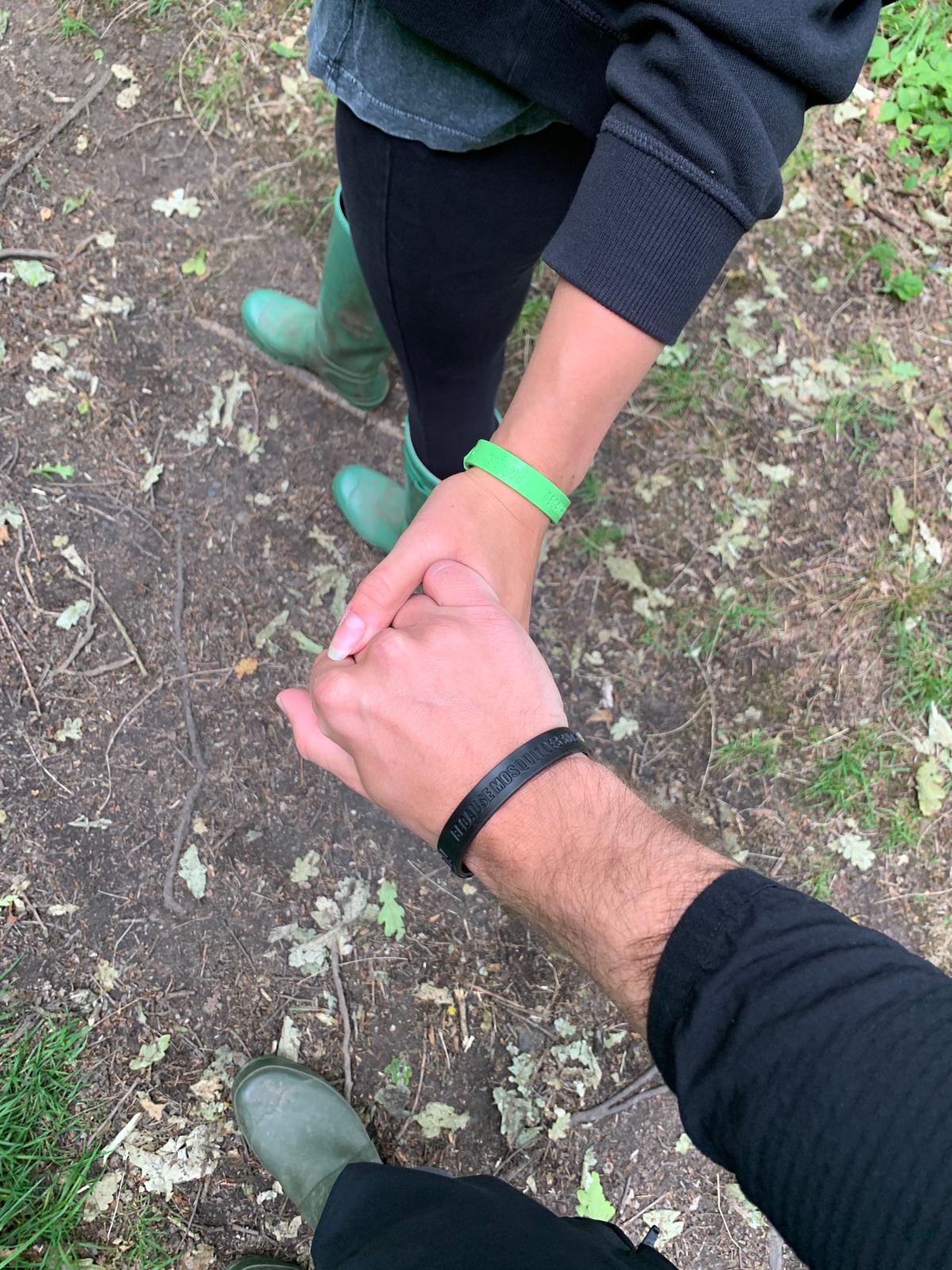
- A Mosquito Band provides a convenient bug repellent wearable for hikes, gardening, travel, and family outings. The flat band is made from non-allergenic synthetic latex rather than natural latex and may help keep mosquitoes away for up to 100 hours.
- The Mosquito Roll-On is a portable roll on mosquito repellent for exposed areas such as ankles, wrists, and the neck. It helps repel mosquitoes for up to 3–4 hours per application, with reapplication according to the product directions.
- For dogs, Pet Tags attach to an existing collar and help provide natural flea, tick, and mosquito protection. If you are searching for a mosquito repellent dog collar or flea and tick tags for dogs, a Pet Tag offers a collar-attached option rather than replacing the collar. Protection may last up to two weeks, depending on conditions and use.
Bug Bam has been developing natural pest-protection products since 1997. Its products are animal cruelty-free, never tested on animals, and scientifically tested by independent laboratories. As with any repellent, no product works for every person or in every situation, so follow the directions and use multiple prevention measures.
The practical takeaway
El Niño may make 2026 and early 2027 a more active mosquito period in parts of the southern United States and other regions affected by unusual rain, warmth, flooding, or drought. The impact will not be identical everywhere, and there is no reliable single number for how much local populations will increase.
The best preparation is simple and consistent: remove standing water, maintain screens, use fans, cover exposed skin, plan around peak activity when possible, and layer protection for the people and pets who spend time outdoors.
A five-minute yard check after each storm may do more to reduce local mosquito habitat than waiting until the evening buzz begins.
Joseph M Symond is the CEO of Bug Bam!®